
Biophilic design: why spaces with nature work measurably better
Taller towers, brighter screens, faster paces — and right in the middle of it all, a person longing for greenery. Biophilic design translates this innate connection to nature into architecture: with proven benefits for wellbeing, concentration and creativity. This guide explains the principles — and gives an honest assessment of which of them a Moss wall fulfils.
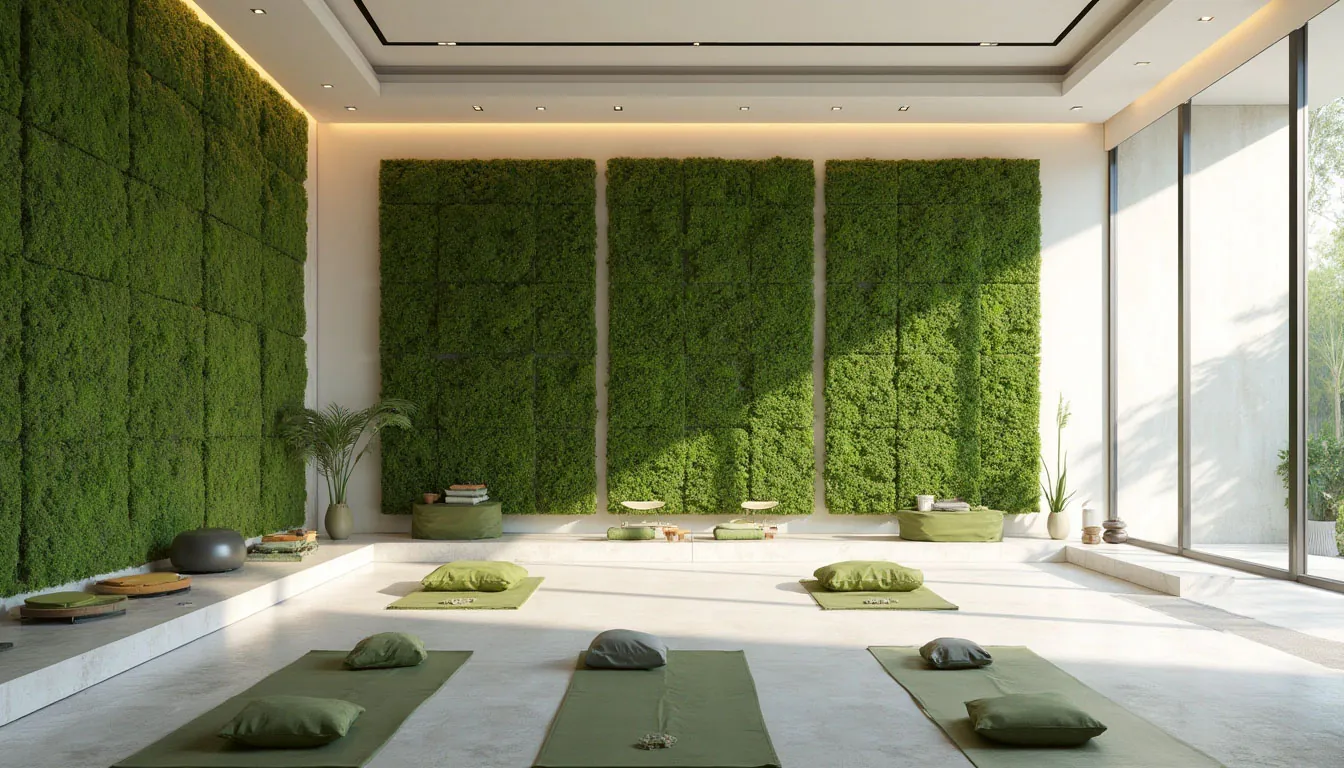
Biophilic Design is a design approach that draws on humanity’s innate connection to nature — the Biophilia — specifically translated into buildings and interiors: through genuine natural elements, natural materials, organic forms and lighting atmospheres. The concept was shaped by Erich Fromm and Edward O. Wilson, and adapted to architecture by Stephen R. Kellert; the consultancy firm Terrapin Bright Green summarised it in 14 patterns Together. Two pot plants on a desk do not constitute biophilic design — but a system combining nature, materials and space certainly does.
The 14 patterns — in three families
Nature in the room
Authentic experiences of nature- Visual connection: A view of greenery — windows, plants, green walls
- Non-visual connection: Feel, hear and smell natural materials
- Irregular sensory stimuli: Movement and change, just as in nature
- Temperature and air variation: noticeable, natural changes
- Proximity to the water: Fountains, bodies of water
- Dynamic lighting: as the day goes on
- Natural cycles: Bringing growth, ageing and the changing seasons to life
Natural analogies
The Language of Nature- Biomorphic forms: organic lines rather than rigid grids
- Natural materials: Wood, stone, moss, leather
- Complexity & Order: rich yet regular structures — like the relief of mature moss
The Nature of Space
Primitive instincts in the floor plan- View: be able to see the whole room
- Withdrawal: secluded spots to recharge your batteries
- Secret: Paths that spark curiosity
- Risk: a controlled thrill as a stimulus
Not just another feel-good trend, but a measured value.
The global Human Spaces Study quantifies the impact of natural working environments: around 15% greater well-being, 6% higher productivity, 15% greater creativity — and a third of employees take the office design into account when choosing an employer. Recent research adds this crucial point: Multisensory Nature experiences — see and feel — have a much stronger impact than images alone. This is precisely where real materials differ from any photo wallpaper.
Which patterns a moss wall actually fulfils
A visual connection to nature — using genuine materials
One Moss wall or Moss ceiling It is neither an analogy nor a print — it is nature in space, permanently green thanks to deep-penetrating dye, from the floor right up to the ceiling.
Non-visual connection — the underestimated strength
A soft texture that invites you to touch it, and a silence you can hear: the open-pored structure absorbs up to 60% of sound (DIN EN ISO 354, More in the Acoustics Collection) — precisely the multisensory experience that research has shown to be particularly effective.
Materials from nature + complexity & order
Moss that has grown is the textbook example of ‘complexity and order’: rich in detail, yet serene as a whole. This illustrates which species of moss creates which structure: Encyclopaedia of Mosses.
A retreat — even as a room divider in the floor plan
A Room divider made of moss creates the sheltered niche called for by the ‘Refuge’ design — privacy, acoustics and nature, all in one element.
The honest boundary
Daylight, fresh air, water, a view: no wall in the world can replace these elements. Biophilic design is like an orchestra — the Moss wall is the first violin, not the whole concert. That said, it is a building element with no running costs: no water, no technology, no maintenance — The difference between this and a living plant wall, in detail.
Where biophilic design takes effect first
In the office
Return, tranquillity, recruitment: this shows how companies are applying the insights from ‘Human Spaces’ to reception areas and open-plan offices The other office.
In practice
Less stress in the waiting room, discretion at reception — hygienic and free from soil and pollen: The Other Practice.
In the hotel and catering sector
The moment that guests photograph and rate: The other hotel.
Start small
It’s easy to get started with the picture frame format: Moss Pictures — and the cost of implementing it is explained by the Cost Guide.
Frequently asked questions about biophilic design
What is biophilic design?
A design approach that deliberately translates humanity’s innate connection to nature (biophilia) into architecture and interior design — through genuine natural elements, natural materials, forms and light. The aim: a measurable increase in well-being, concentration and relaxation.
Where does the term come from?
From the field of psychology. Erich Fromm described biophilia as a love of living things; Edward O. Wilson popularised the concept in the 1980s; Stephen R. Kellert applied it to architecture — and Terrapin Bright Green summarised it in 14 patterns.
What are the measurable benefits?
Around 15% greater well-being, 6% higher productivity and 15% greater creativity — according to the Human Spaces study on nature-inspired working environments. A third of those surveyed take interior design into account when choosing an employer; multisensory experiences have a greater impact than purely visual ones.
Is a Moss wall a genuine example of biophilic design or simply a decorative feature?
Genuine biophilic design. It fulfils several of the 14 patterns using real materials: visual and non-visual connection to nature, natural materials, complexity and order — and, as a room divider, it also provides a place of retreat. A photograph of nature does not fulfil these patterns, but real moss does.
Is a moss wall on its own enough?
No — daylight, fresh air and a view are no substitute for a wall. However, it is the most practical building block: real nature that requires no watering, technology or maintenance, and is permanent Wall, Blanket or as Room divider.
How do I get started in my own room?
Places where people arrive and spend time: reception, waiting area, meeting area. The Moss picture is the easiest way to get started — and you can check the material beforehand using the Sample box.
How much nature can your space take?
In ten minutes, we’ll adapt the 14 designs to your specific floor plan — offering an honest assessment of where Moos works best and where other options are more suitable. On weekdays, we’ll get back to you within 24 hours.