
The moss encyclopaedia: which type of moss suits your space?
Iceland moss, reindeer moss, Pole Moss, Flat moss — anyone delving into the world of Moss walls for the first time will come across lots of names and see green everywhere. This guide brings some order to it all: each species, its characteristics, its effect — and the three facts that’ll spare you all the technical jargon.
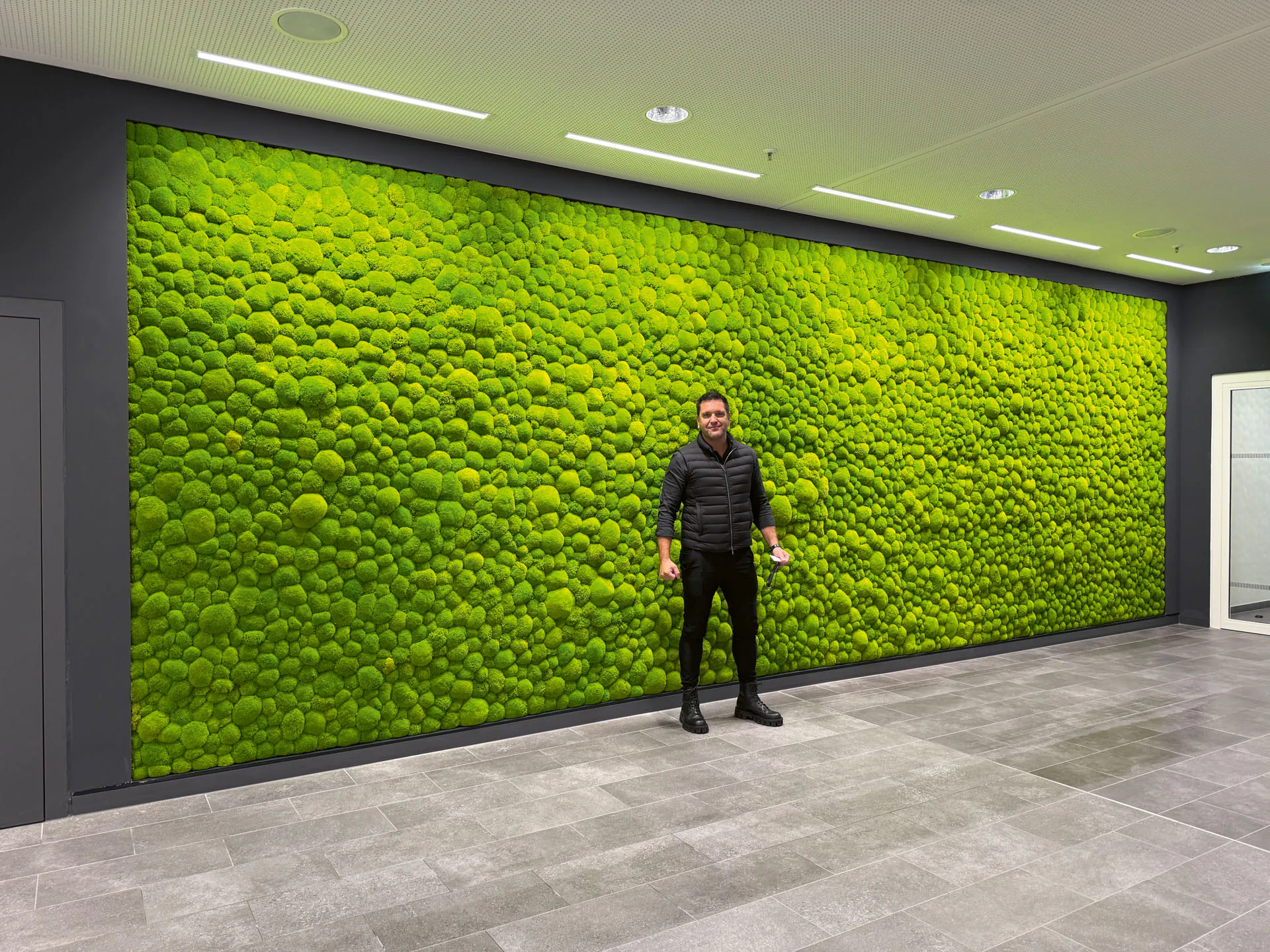
Four types are used for moss walls, moss ceilings and moss pictures: Islandmoos (soft, richly coloured — also known as reindeer moss), Flat moss (calm and level, like a forest floor), Pole Moss & Bun Moss (foam pads with the greatest acoustic effect) and the Moss mix, which ties everything together to create a cohesive look. There’s no such thing as the ‘best’ type of moss — just the one that suits your space. You can find out how to choose the right one on this page.
Three facts, which explain everything
Moss has no roots.
In nature, moss thrives on moisture from the air — it doesn’t need soil. That is precisely why it works vertically on a wall and overhead on the ceiling: without pots, without a growing medium, without any technology. What is a matter of course in the forest is made possible by the Moss wall.
’Preserved’ means that nothing can dry out.
During the preservation process, the water inside the plant is replaced by a plant-based solution. The moss remains soft and retains its shape — but there is simply nothing left that needs to wilt, dry out or be watered. ‘Zero maintenance’ is not just a marketing slogan, but a matter of physics.
Not all colours are the same.
Imagine two green apples: on one, only the skin is coloured — on the other, the flesh is coloured too. Many suppliers colour their moss like the first apple, just on the surface; over the years, it turns grey. MOOSMOOS’s deep-dyed process ensures the colour penetrates right through — which is why we offer a lifetime colour guarantee. How to recognise an original: by the embossed MOOSMOOS logo — it is only found on items that have been deep-dyed and manufactured in Oppach.
The moss species in the encyclopaedia
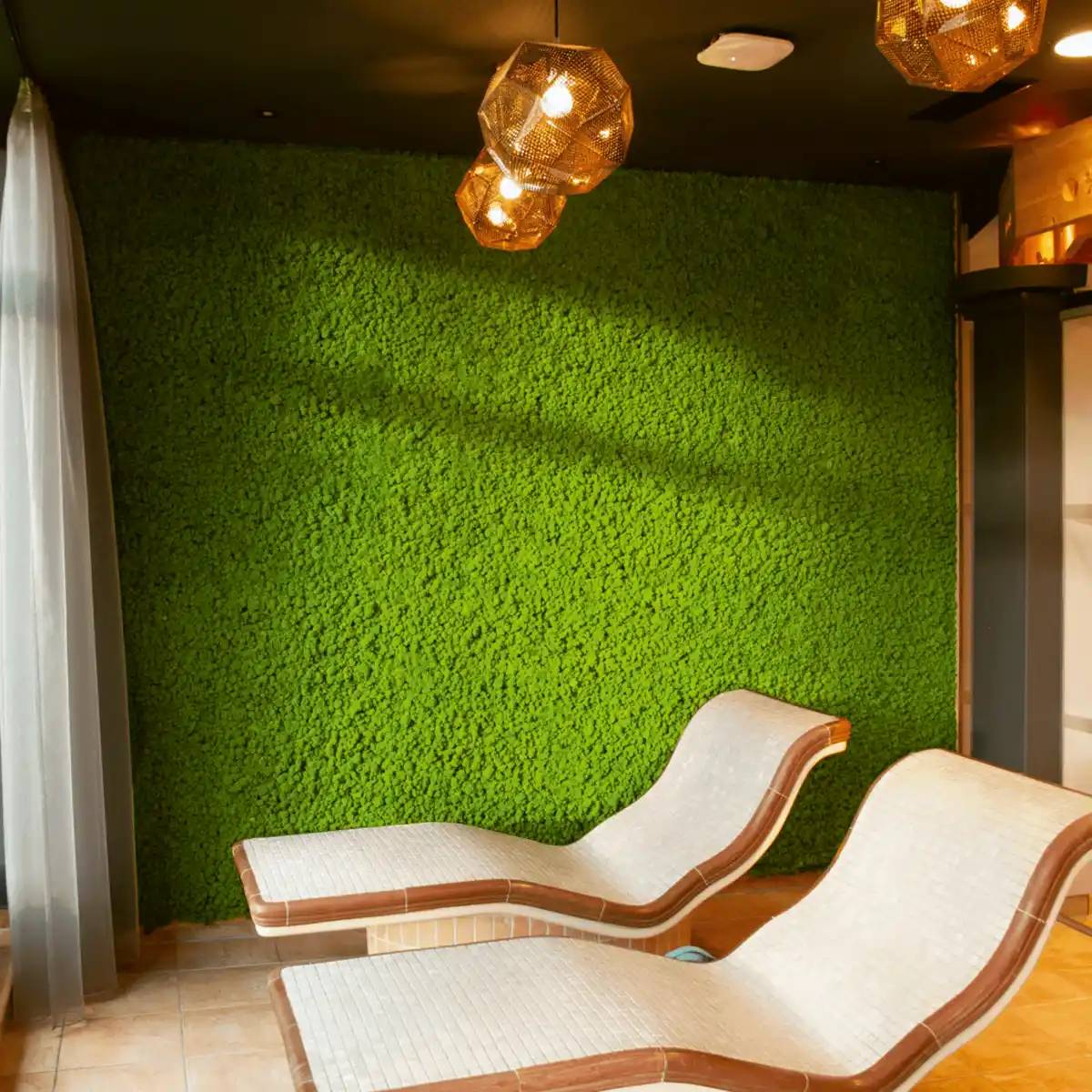
Islandmoos — the colour
Also known as: reindeer moss · Icelandic moss · Irish moss · fever mossStrictly speaking, it is not a moss at all, but a branching shrub lichen found in the forests of Northern Europe — a symbiotic community of fungi and algae, measuring 4 to 15 cm in size. The Icelanders discovered it as a medicinal herb: Its lichen acids have antibiotic properties, which is why Iceland moss is well known in pharmacies. In wall greenery, it acts as a colour carrier: its soft, open structure absorbs deep colours more brilliantly than any other species, ranging from apple green to forest green and including custom colours on request.
Choose this if your room needs a touch of freshness, softness and vibrant colour.
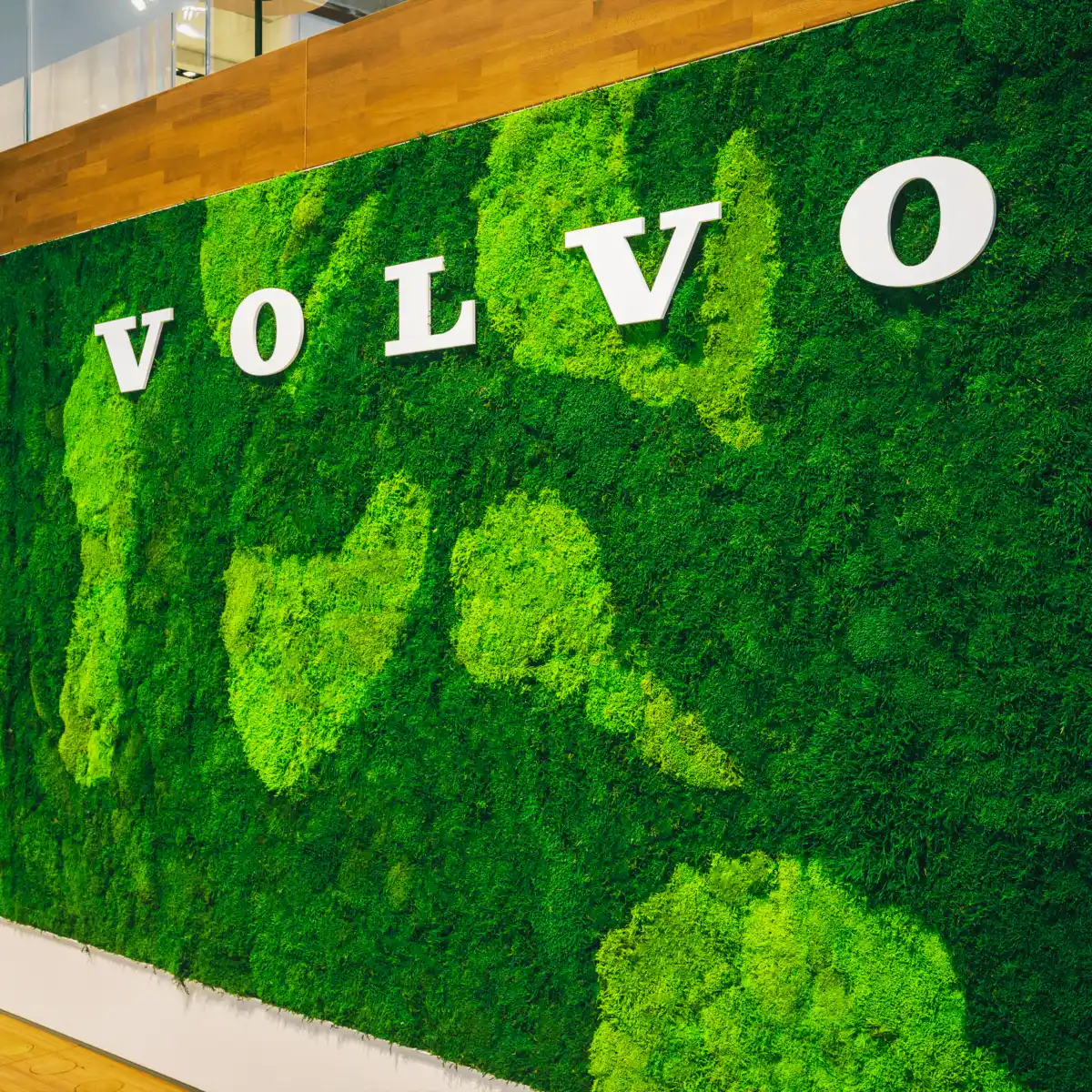
Flat moss — the area
Also: Waldmoos · PlattenmoosThis is how the forest floor grows: densely interwoven, flat mats and strands ranging in colour from dark green to yellow-green, growing on soil, stones and wood. Flat moss is the most serene variety — elegant, understated, expansive — whilst regulating the humidity in the room. It is precisely this serenity that makes it the ideal backdrop: logos, lettering and graphics made from moss sit on flat moss as if on velvet.
Choose this if you want to emphasise elegance, tranquillity or your message.
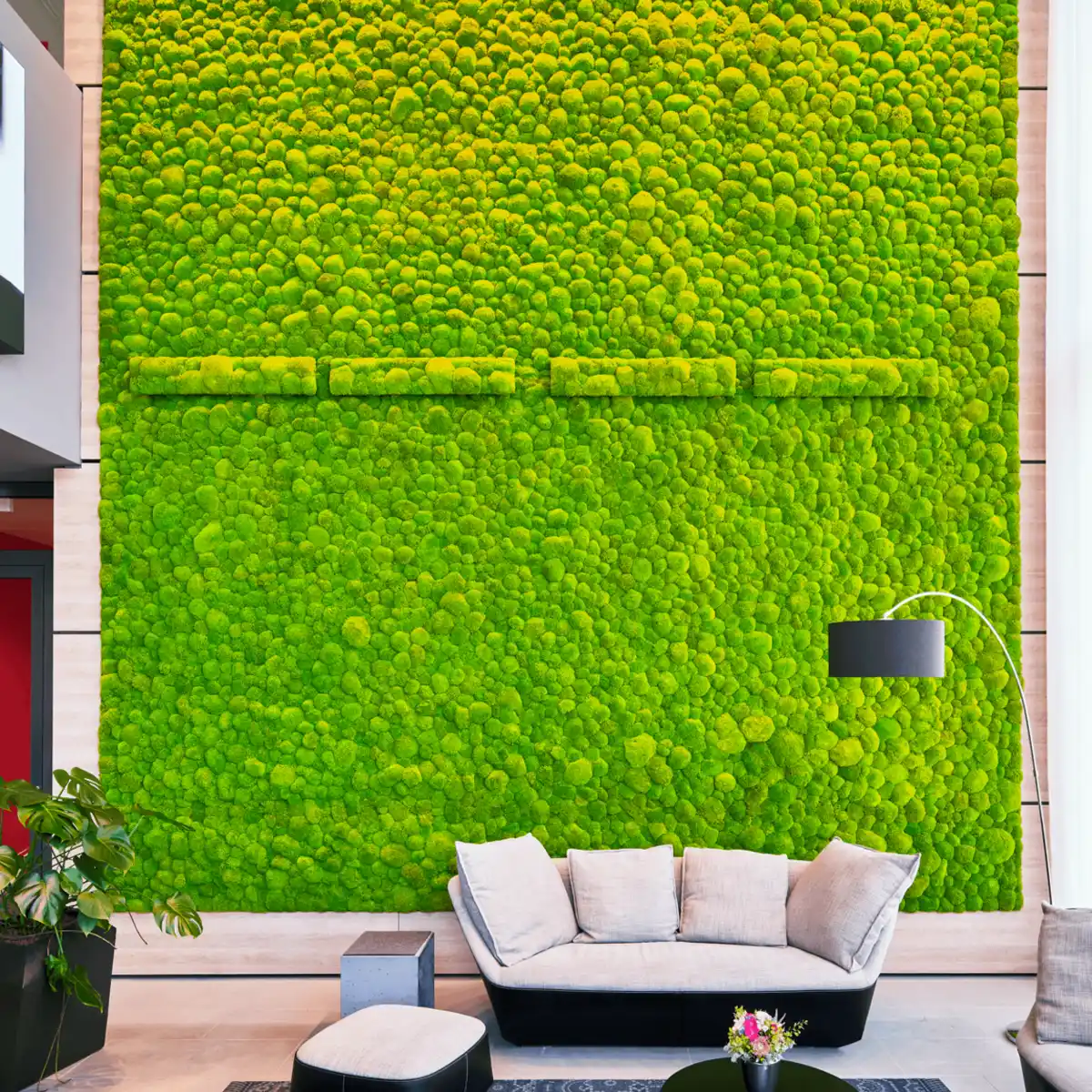
Pole Moss & Bun Moss — the sculpture
Also known as: cushion moss · pillow moss · bun mossDelicate forest moss that has grown into soft, half-spherical shapes. It is harvested in the same way as mushrooms: by hand, in private mixed woodland, by trained staff — and, following the chequerboard principle, no more than 20–30% of an area is harvested, so that the Moss ceiling can regrow. When applied to a wall, it creates a relief of light and shadow — the wall becomes a three-dimensional object. And because its open, deep structure absorbs sound particularly effectively, Pole Moss is also the most effective natural sound absorber in the range.
Choose this if your room needs depth, drama — or, above all, peace and quiet.
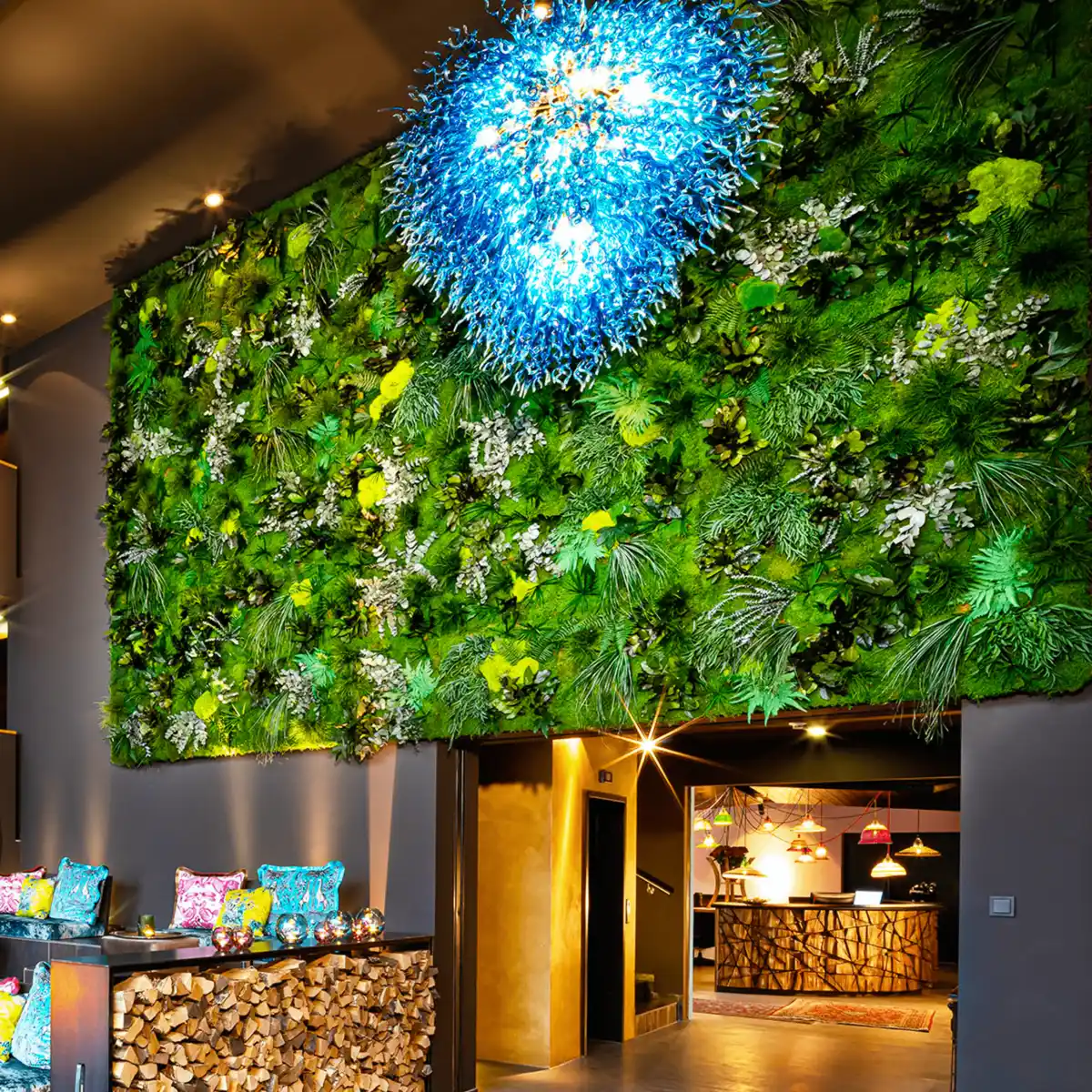
The Moss Mix — the landscape
A composition comprising all typesIceland moss, flat moss and Pole Moss in a single composition — like the view from an aeroplane of forests, meadows and hills. Every moss mix is hand-blended in Oppach and is one of a kind: no other wall in the world features the same landscape.
Choose this if you want your wall to have its own distinctive style.
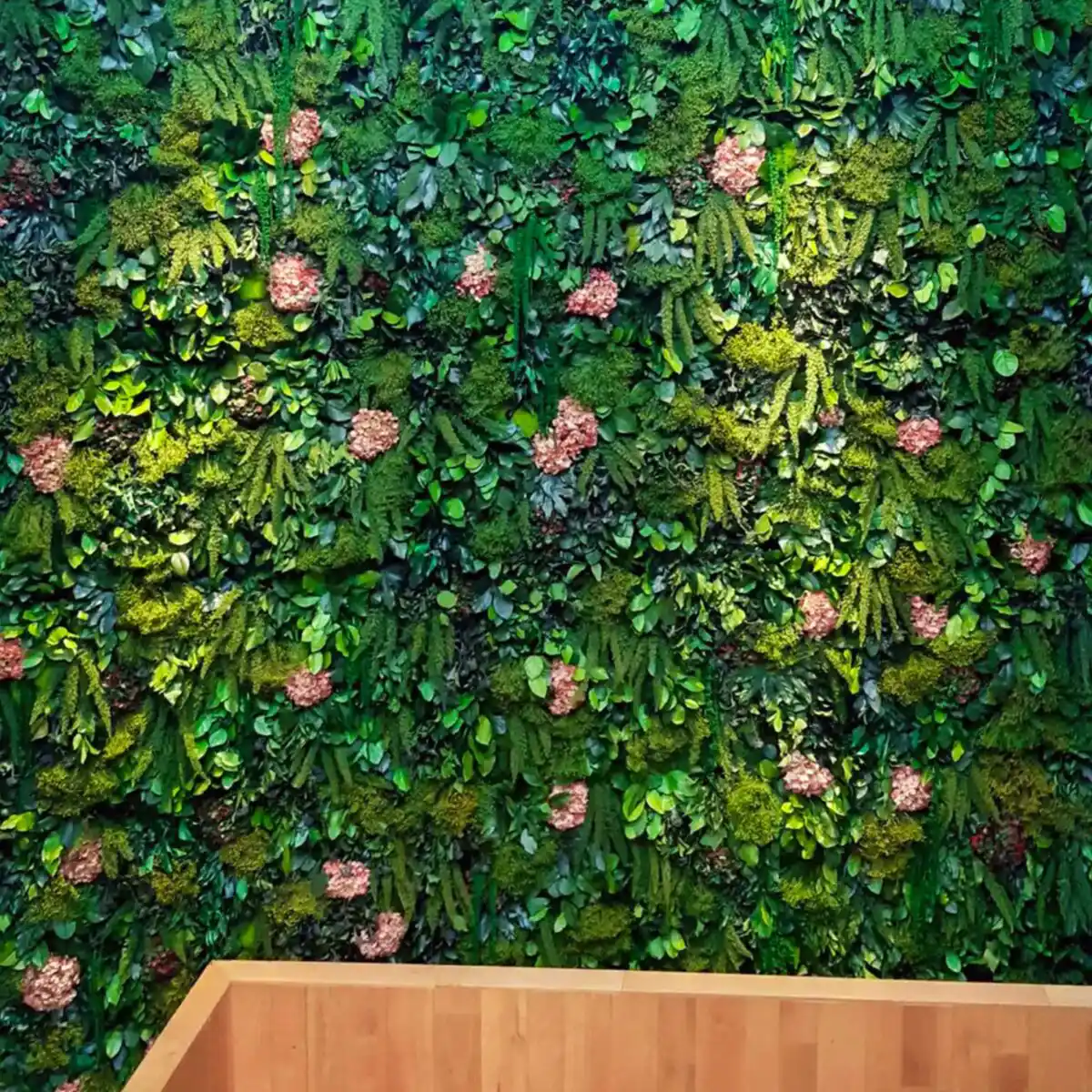
Preserved plants — the ensemble
Ferns · Grasses · Eucalyptus · Hydrangeas & flowersNo moss, but the following additions: ferns, grasses, eucalyptus and foliage such as cleavers, cyperus or foxtail — preserved using the same method, complemented by accents of bark, branches or stones. Preserved hydrangeas retain their vibrant colours and transform the space into a wall of flowers; when densely planted, they create a jungle-like look for hotel lobbies, restaurants and trade fairs.
Choose this option if you want to turn the green space into a garden.
It is not the same moss the same moss.
We collect our mosses ourselves — in the forests of Europe, gently, so that the fibres can regrow — and preserve them in our own dye works in Oppach using the exclusive Druckpräparation+: made from 100% natural materials. This ensures that the moss retains all its natural properties — it absorbs and releases moisture from the air and interacts with the room, as well as up to 60% sound absorption in accordance with DIN EN ISO 354. With this system, we have over 25,000 projects We create finishes that look just as good after ten years as they did on the first day — with a lifetime guarantee on colour and freshness. You can take our word for it — or see for yourself with the Sample box in your own hands.
Which moss for which purpose?
It’s going to get quieter
Pole Moss, or a moss mix with a pronounced texture — its deep texture absorbs sound most effectively, whether in an open-plan office or a restaurant.
Wall greeneryIt should look elegant and serene
Iceland moss for soft, even colour surfaces; Flat moss for elegant understated style — the ideal choice for reception areas, surgeries and any room designed to inspire confidence.
Clarify through discussionYour logo is to be green
Flat moss as a backdrop, with the logo as a relief or inlay on it — this way, the brand becomes part of the space rather than just a sign on the wall.
Your logo made of mossIt should look stunning
A moss mix with preserved plants — as a jungle wall or a ‘Botanical Sky’ overhead. The perfect choice for photo shoots.
Ceiling greeneryFrequently asked questions by beginners
Is that moss real — and is it still alive?
It is 100% real moss from nature — but it is no longer alive in the botanical sense: during the preservation process, the plant’s natural moisture is replaced by a solution made from 100% natural, plant-based substances. Its texture, softness and colour are permanently preserved, without anything needing to grow, be watered or be looked after.
Are reindeer moss and Iceland moss the same thing?
Yes — both names (and ‘Icelandic moss’ too) refer to the same species. Botanically speaking, it is actually a shrub lichen, not a moss. ‘Iceland moss’ has become the established term in wall greenery; it is the most vibrantly coloured and softest species in the range.
Does the colour fade over time?
Not with us — it’s the dyeing process that makes the difference. Think of the two apples: the surface colour turns grey over the years, but the colour deep within does not. With MOOSMOOS, the colour is embedded in the material thanks to the ‘Druckpräparation+’ process; it is lightfast and comes with a lifetime colour guarantee. The only thing any Moos product should avoid is prolonged direct sunlight.
Does a moss wall have a smell?
No, apart from the first few days. Fresh from production, preserved moss may have a slight natural, earthy scent; this dissipates after a short time. After that, the wall is not only odourless: the open-pored structure of the moss absorbs odours from the room and neutralises them. It cannot go mouldy or ferment.
Is this suitable for people with allergies — does moss attract insects?
Yes, it’s suitable for people with allergies — and insects cannot survive in it. Preserved moss does not flower, does not produce pollen and contains neither soil nor moisture. The Druckpräparation process also uses naturally occurring salts in which small creatures cannot take up residence; the process is carried out without the use of animal products or pesticides.
What is the moss preserved with — is it safe?
Contains natural salts and glycerine — completely safe for your health. The dyeing is carried out in our own dye works using the dip-dyeing process: the moss is dyed right through rather than simply coated on the surface; the cosmetic dyes are lightfast and vibrantly coloured.
Is a Moss wall suitable for a sauna or swimming pool?
Yes, subject to an assessment beforehand. Provided there is adequate ventilation and moderate humidity, preserved moss can also be installed in sauna and wellness areas; high humidity actually keeps it particularly soft. It should not be placed directly in the shower or pool, and direct contact with water should be avoided. A personalised consultation will help determine which solution is suitable for your area.
Is it OK to touch the wall?
Absolutely — the feel is part of the experience, and the occasional touch won’t do any harm. The design should simply avoid constant rubbing in the same spot (such as next to door handles). If you want to feel it for yourself before making a decision: The Sample box brings all kinds of things to your desk.
Where does the moss come from?
From the forests of Europe — harvested sustainably and carefully to allow the areas to regenerate. Dyed and crafted by hand in Oppach in Oberlausitz, and awarded the Blue Angel label.
So which type of moss is the best?
The one that suits your space — whether it’s colour, surface, sculpture or landscape. In the Conversation We’ll sort this out in a few minutes; you can then try out the candidates for yourself using the Sample box.
„Even after four years, the moss still looks vibrant — the colours are as intense and fresh as ever. It was definitely worth the investment!“
Kevin Kronschläger · Google review · June 2025These customers were recently in exactly the same position as you are now.
Deep colouring & stabilisation — explained in person
Why is Moos stabilised in the first place — and what distinguishes the deep dyeing of the ‘Druckpräparation+’ range from surface-dyed products? Two brief answers from the manufactory: in 45 and 60 seconds.
Which type of moss deserves your space?
In ten minutes, we’ll translate your sense of space into the right type of moss — personally, not automatically. On weekdays, we’ll get back to you within 24 hours.