
Indoor plant walls — real, artificial or preserved? The honest comparison.
Both are entirely natural, both transform spaces — and yet, in everyday life, almost everything sets them apart: technology, maintenance, costs, choice of location. Here you’ll find a comparison of Moss walls that does justice to both systems. And a clear recommendation on when each one comes out on top.
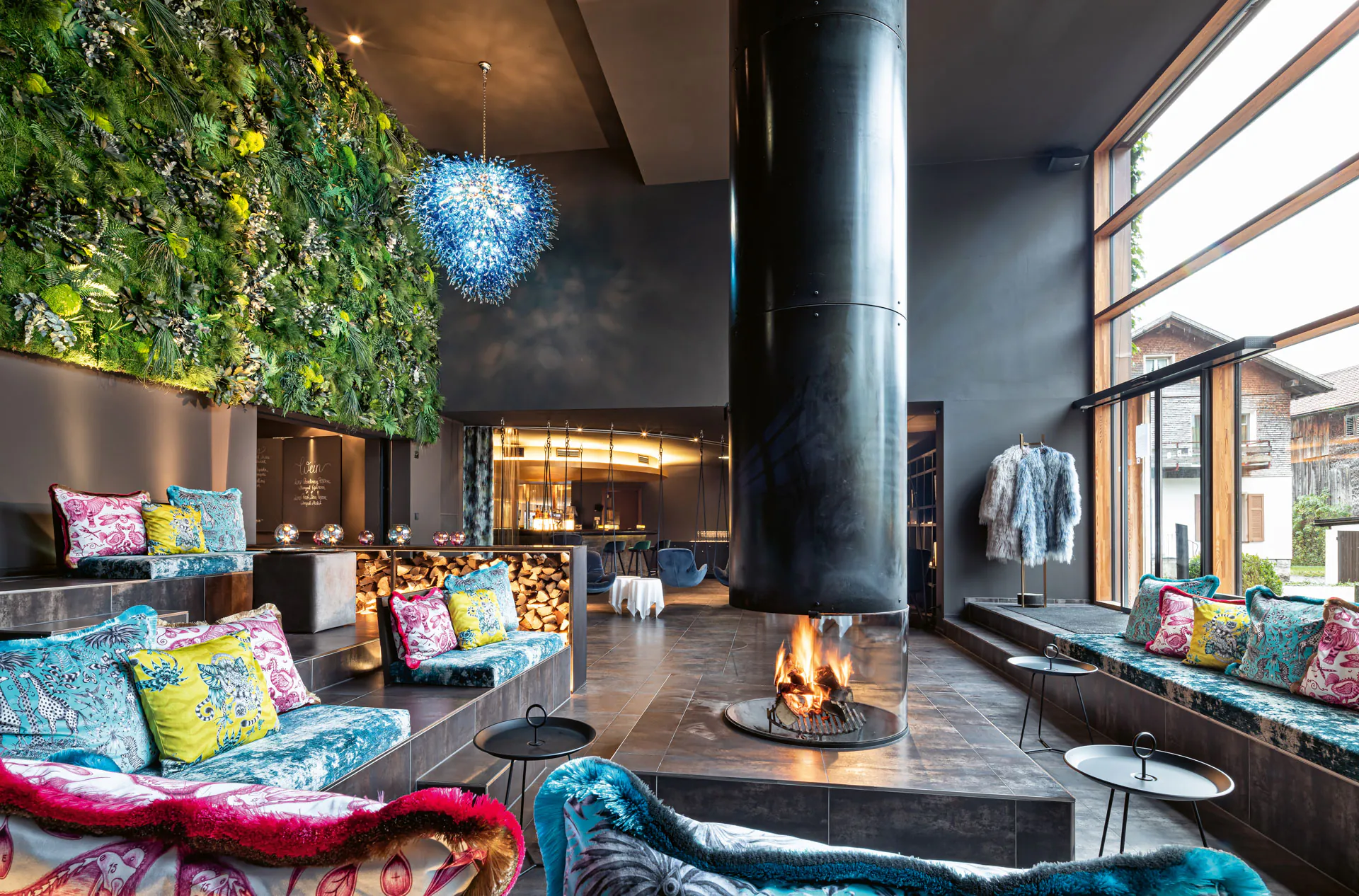
There are three types of indoor plant walls. Alive It’s genuine, but it requires irrigation systems, lighting and specialist care. Artificial It is easy to look after, but is made of plastic — visible up close, but has no acoustic effect. Preserved It is a genuine natural material and completely maintenance-free: no water, no light, no upkeep. The right choice depends on the lighting, technology and maintenance budget for your space — and on who will look after it.
Both are truly natural — but fundamentally different systems
The living plant wall
A biological-technical system: Real plants grow in substrate or hydroponic modules, supplied by an automatic watering system, usually supplemented by plant lighting and fertilisation. It lives, grows and changes — and to do so, it needs exactly what all living things need: water, light, nutrients and regular expert care.
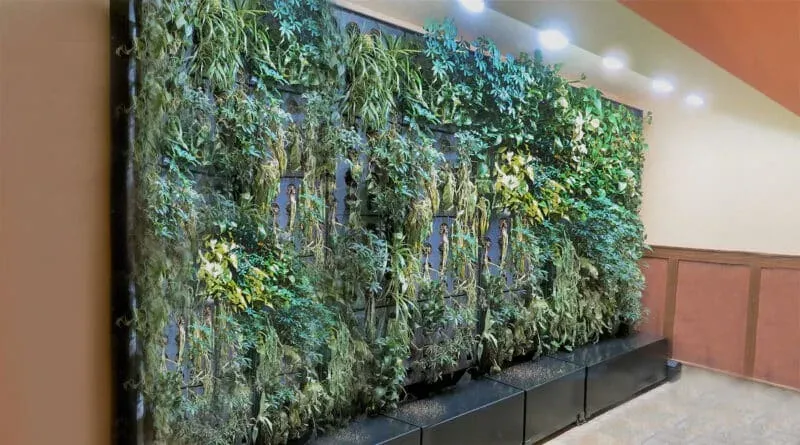
The preserved Moss wall
Real moss, whose sap has been replaced by a preservative solution made from 100% natural ingredients — its texture, softness and depth are permanently preserved. No plastic, no imitation: nature frozen in time. At MOOSMOOS, the moss is Druckpräparation+ Furthermore, it is dyed right through (deep-dyed), rather than just treated on the surface — the basis of our lifetime guarantee. What’s more, the moss continues to work within the room: it absorbs and releases humidity, and it absorbs up to 60% of the sound in accordance with DIN EN ISO 354. Neither involves any technical systems — with a living wall, the effect depends on watering, light and maintenance.
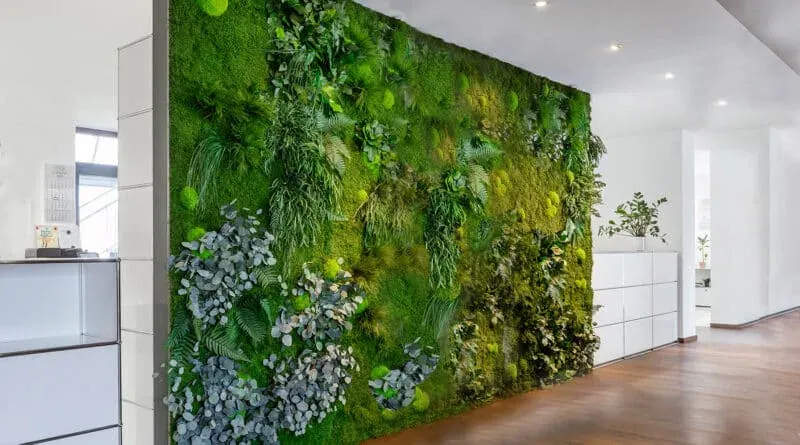
The plant wall comparison in detail
| Criterion | Living plant wall | Artificial plant wall | Preserved moss wall |
|---|---|---|---|
| A genuine natural material | Yes — live plants | No — plastic, often with a printed moss-like texture | Yes — real moss, just not growing any more |
| Water & Technology | Irrigation system with a water connection or tank, pumps and control system — equipment that is operated and maintained | No technology — just plastic: the leaves and stalks are injection-moulded or printed | None. No connection, no pump, no tank — it’s just hanging on the wall, that’s it |
| Light | Sufficient daylight or plant lighting with continuous power consumption | No light required; strong sunlight causes the colours to fade over time | No light required — direct sunlight should in fact be avoided |
| Care | Checking watering, applying fertiliser, pruning, replacing plants — regular checks by qualified staff | Dust it off and give it a quick wipe now and then — the smooth surface attracts dust | Do not remove dust until at least five years have passed. That’s all. |
| Running costs | Water, electricity, fertiliser, maintenance contract, replacement plants — month after month, on an ongoing basis | No running costs, but replacement is required as soon as the optics start to deteriorate | None. One-off investment — Honest guidance in the cost guide |
| Shelf life | Limited by the nature of the system: even with the best care, plants may die and be replaced | Mechanically durable, but takes on a dusty, dull appearance over the years | Colour-fast for many years — thanks to deep dyeing at MOOSMOOS with lifetime guarantee |
| Weight & Statics | Weighing the substrate and water: depending on the system, this may be a matter for structural analysis | Lightweight — like preserved material | Lightweight construction on base panels — also suitable for ceilings and plasterboard walls |
| Site selection | Requires the right climate, light and access to water — not every room is suitable | Can be installed anywhere, even without electricity or water | Any interior space: corridors, windowless meeting rooms, reception areas, studios |
| Hygiene | Moisture + growing medium = routine checks for mould and pests; pollen depending on the plants | No damp, no pollen — but static electricity that attracts dust | No soil, no moisture, no flowers — nothing that mould, insects or allergies can react to |
| Acoustics | Helps to reduce noise, depending on the planting and the system | Hardly: solid plastic surfaces reflect sound rather than absorbing it | The open-pored moss structure measurably absorbs sound — reducing room noise by up to 60% |
| Aerodynamic effect | This is where she wins: active air purification, oxygen, evaporative cooling | None | Passive: moisture-regulating and dust-repellent — but no photosynthesis |
| Texture & Smell | Soft and moist, with an earthy scent — just like a real plant | Smooth and cool, with a plastic smell at first | Soft and springy; the earthy odour dissipates after a short while |
A fair comparison requires all three columns to be complete — even where the living wall is ahead. That is precisely why you can trust the right-hand column.
A plant wall in the office — the three typical stumbling blocks
There’s no daylight at the Wishing Wall
The wall that everyone is meant to see is usually in the reception area or in an internal meeting room — in other words, where there are no windows. A living wall then requires plant lighting: equipment on the ceiling, electricity included in the running costs budget, and yet the plants still grow unevenly. Preserved moss does not need light. The wall looks exactly the same in the windowless corridor as it does by the window.
Nobody is responsible
When people first move in, they’re full of enthusiasm; but after six months, nobody asks about the watering schedule any more. Living systems need regular professional checks — without them, plants die off, and the wall becomes a nuisance rather than a showpiece. A preserved wall has no maintenance schedule because there is nothing to maintain: dusting is required after five years at the earliest.
There is no supply cable
Retrofitting water and electricity connections to an existing wall involves cutting slots, plasterboard work and liaising with the landlord. This is precisely why most retrofit projects in existing buildings fail. Preserved walls are mounted on carrier panels — without any connections, without interfering with the building services, and usually completed in a single day.
And what about artificial plants?
They solve one maintenance problem, but create another: from a distance of two metres, an artificial plant wall looks like a backdrop — smooth surfaces, uniform leaves, often with a printed moss texture. Preserved moss is a genuine material with real depth and texture; you can see it in the raking light and feel it beneath your fingers. That is the difference visitors actually notice — and the reason why we recommend touching it before anyone makes a decision.
Where the living plant wall really wins
Active air circulation
Living plants carry out photosynthesis: they absorb CO₂, release oxygen and can filter pollutants from the air in a room. A preserved wall cannot do this — if your main aim is to improve air quality, you need living plants or ventilation systems.
The lively spectacle
A living wall grows, changes and sprouts new shoots. For buildings with their own team of gardeners — botanical gardens, flagship architectural projects — it is precisely this change that makes them so appealing.
So the crucial question is not ‘which is better?’, but ‘who will take care of it?’
Both types of living wall have the same drawback: a technical system that requires ongoing maintenance. If a team is on hand to look after it — brilliant. If not, the living display turns into a brown eyesore on the reception wall. This is precisely where the strength of the preserved Moss wall comes into its own.
Odours
Once the inherent odour has dissipated, the open-pored moss structure works in the opposite direction: it absorbs odours from the room and neutralises them.
Humidity
The moss absorbs moisture from the air in the room and releases it again. It works in harmony with the room — without a water connection, without technology, without maintenance.
Acoustics
Up to 60% sound absorption in accordance with DIN EN ISO 354. A reverberant reception area is transformed into a space where people enjoy spending time — that is the difference visitors sense before they can even put it into words.
Colour, all year round
The deep colour delivers what a living wall displays only during its best months: rich, consistent colour — in January just as in July, with a lifetime guarantee of colour and freshness.
The preserved Moss wall stands out there, where your everyday life takes place.
Zero maintenance, zero technology, zero ongoing costs — at any location, even without windows. No issues with mould, pests or allergies, but measurable acoustic benefits. Independent industry comparisons put the total cost of active systems over five years at Three to four times as much the preserved wall — and whilst plants are being replaced elsewhere, the following applies to deep-dyed MOOSMOOS moss: lifetime guarantee. Here’s an example from our own experience: a stylish Moss wall, costing around €8,000 including installation — and not a single euro more after that.
Which wall, when? Four honest recommendations
Reception, office & meeting room
Preserved Moss wall. What counts here are visual impact, acoustics and reliability — nobody has time to look after a wall. About MOOSMOOS’s wall greenery
Surgery, Hotel & Studio
Preserved Moss wall — for hygiene reasons, more than ever: no damp, no pollen, no need for pest control in sensitive areas.
Windowless & challenging rooms
Preserved Moss wall — the only option that works anywhere without the need for light, specific climate conditions or a water supply.
Stately architecture with a team of gardeners
A living plant wall — provided the budget and ongoing maintenance are guaranteed in the long term, nothing can replace the living spectacle it creates. We’ll tell you this quite frankly when we speak.
Frequently asked questions on the decision
How can I tell if a MOOSMOOS item is genuine?
On the recessed brass emblem: Every piece from the Oppach manufactory bears this emblem — it guarantees deep colouring, handcrafted quality and a lifetime guarantee. If the emblem is missing, the wall hanging is not from MOOSMOOS.
Is a preserved Moss wall dead or artificial?
Neither. Preserved moss is 100% natural: the plant’s natural sap is replaced by a preservative solution made from 100% natural substances, ensuring that its structure, softness and colour are permanently preserved. It does not continue to grow — but it is not plastic; it is real moss with a genuine feel. The quickest way to be convinced is to feel it for yourself: Order a sample box and experience it for yourself.
Does a preserved Moss wall produce oxygen?
No — only living greenery carries out photosynthesis; that is the real advantage of a living wall. A preserved Moss wall, on the other hand, has a passive effect: it absorbs sound, regulates humidity and repels dust — without the need for water, light or technology.
Can a living plant wall go mouldy or attract pests?
Yes, that risk is inherent in the system. Where moisture, substrate and organic material come together over a prolonged period, mould, fungus gnats or lice can take hold — which is why professional inspection is an essential part of any living system. A preserved Moss wall contains neither soil nor moisture and therefore simply offers no basis for life.
Which wall is suitable for people with allergies?
The preserved Moss wall: it does not flower, does not produce pollen and requires neither substrate nor fertiliser. In the case of living systems, it should be checked in advance whether staff or visitors have any reactions to the plants used.
Does a Moss wall work in windowless rooms as well?
Yes — in fact, it works particularly well. Preserved moss does not require light; corridors, internal meeting rooms or studios are no obstacle. Living systems, on the other hand, require plant lighting in such spaces, which incurs ongoing electricity costs.
How long does a preserved Moss wall last?
In normal indoor conditions (approximately 40–60% humidity, no direct sunlight), for many years. The key factor is the dyeing process: thanks to the deep dyeing of the Druckpräparation+ preparation, the colour is embedded within the material rather than simply sitting on top of it — which is why we offer a lifetime guarantee, whereas products treated only on the surface tend to fade over the years.
Are there any living Moss walls as well?
Yes, as a niche option — living moss is less demanding than traditional plant walls, but it still requires moisture, the right climate and some care. If you want the aesthetic appeal of moss without any kind of system, preserved moss will give you the same look with zero maintenance.
Can I switch from a living wall to a Moss wall?
Yes — we regularly receive enquiries of this kind when maintenance contracts, technical issues or plant loss become a burden. We discuss with you what parts of the existing structure can be reused and plan the switch to a maintenance-free system.
How much does an indoor plant wall cost?
This depends on four factors: surface area, material, construction and installation conditions. A living wall incurs ongoing costs — water, electricity, a maintenance contract and the cost of replacing plants continue every month, whereas a preserved wall does not. The framework for our business is calculated by the Cost Guide openly.
Which plant wall works without light?
The preserved variety. It does not carry out photosynthesis and therefore requires neither daylight nor artificial plant lighting — windowless corridors, internal meeting rooms and reception areas in underground car parks are no obstacle. Living walls require technology that consumes electricity continuously in such locations, whilst artificial plants fade in strong sunlight.
Is a preserved plant wall real?
Yes, 100 per cent. It is natural moss in which the plant sap has been replaced by a preservative solution; its structure, softness and colour are preserved. It doesn’t grow any further — but it isn’t plastic, and that’s exactly what you notice when you touch it.
How long does a plant wall last without any maintenance?
A preserved wall will last for many years in normal indoor conditions; we offer a lifetime guarantee on the moss used in our indoor products. A living wall, on the other hand, will last for weeks without any maintenance — without watering and monitoring, it will fail due to the nature of the system.
„We bought our first MOOSMOOS over 10 years ago — and it still looks exactly the same. Everything’s perfect once again: brilliant quality, lovely colours.“
Sandra Richter · Google reviewThese customers were recently in exactly the same position as you are now.
The difference in quality in 45 seconds
Cheap dyes fade, flake off and attract dust — whilst solid-coloured, naturally prepared moss retains its vibrancy. Andreas Bergermann explains the difference in the same way he does during a consultation.
Which wall suits your space — and your everyday life?
In ten minutes, we’ll clarify the location, impact and investment framework — and we’ll give you our honest assessment, even if the answer isn’t ‘Moos’. On weekdays, we’ll get back to you within 24 hours.