

Safe wall coverings
Interior Design Challenges
Walls significantly shape the character of rooms and buildings. Increasingly, biomaterials and sustainable wall coverings are being installed for natural interior design. The materials used should not merely be decorative. The demands on interiors have fundamentally changed over the years. Especially in offices or practices, interior architects and designers face new, significant challenges in meeting user demands. They increasingly rely on raw materials and materials that provide additional added value. Natural wall coverings are ideally suited for this purpose.
Natural Materials are Distinguished by Special Properties
The use of natural products such as felt, wood, cork, or moss for wall coverings improves acoustics and the indoor climate, depending on the application. These materials are easy to maintain, low in pollutants, and extremely versatile. Complete room concepts can be realized with natural raw materials. Simultaneously, they contribute to the environment – many materials are now produced and installed in an extremely sustainable and resource-efficient manner.
We Present 5 of the Most Beautiful Materials and Explain Their Advantages and Disadvantages
Wood
This classic among wall coverings boasts a long tradition. Raw wooden walls shaped interiors for a significant period throughout human history. And who does not recall tall, slightly musty-smelling rooms that appeared heavy, gloomy, and eerie due to dark wood paneling? The wooden panels of the 70s are long outdated today – wood is once again being used with unprecedented versatility.
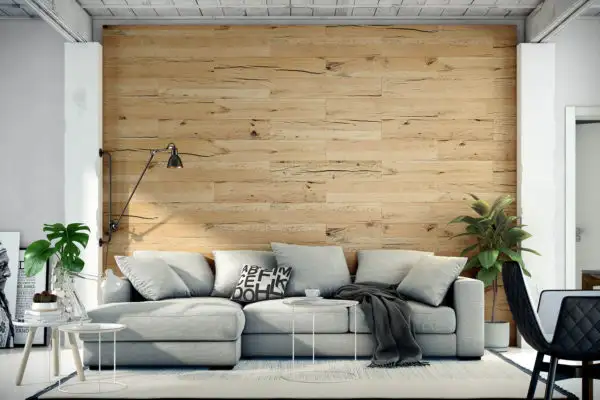
Oak Wall with Sofa
Advantages:
- Warm, natural aesthetic
- Unique structure and feel
- Easy to process
- Creates a pleasant indoor climate
Disadvantages:
- Wood ‘works’ and changes, minor noises are normal
- Requires more maintenance
- Must not be permanently exposed to moisture
- Not fireproof
Stone
Stone wall coverings have also been used for a very long time; indeed, they have always been an integral part of human construction. One should not merely think of simple fieldstone dwellings. Noble materials such as granite and marble were utilized early in architecture. Today, the trend is primarily returning to natural stone walls, bricks in industrial design, or slate panels for an urban aesthetic.
Advantages:
- Break-resistant and waterproof -> perfectly suited for showers, bathrooms, and other damp rooms
- Fireproof and non-combustible
- Good heat storage capacity
- Three-dimensionality adds depth to the room
Disadvantages:
- Inspection and preparation of the substrate requires expertise
- Relatively expensive
- Not suitable for all wall constructions due to its high self-weight
- Challenging to realize color combinations
Cork
70 percent of the global cork harvest is later used for manufacturing stoppers for wine and sparkling wine bottles. Everyone is familiar with the “cork.” Soles for slippers are also frequently made from cork. In the building materials industry, however, the material is more of a niche product – partly because the limited raw material is comparatively expensive. In residential areas, cork is primarily known as a material for floor coverings. Nevertheless, unique wall designs can be realized, as cork can be used as a wafer-thin wallpaper.
Advantages:
- Extremely lightweight
- Very thin – can even be processed as wallpaper
- Robust and extremely durable
- Many design variations possible
Disadvantages:
- Relatively expensive
- Not fireproof
- Only partially suitable for damp rooms
- Can fade with excessive UV radiation
- Processing requires expertise
- Grows back very slowly
Moss
Moss is a fascinating alternative to hydroponics in the field of indoor greening. Properly prepared and treated, it requires neither light, watering, nor fertilization. Furthermore, there are no additional costs for maintaining this evergreen wall design. A natural wall covering made of moss and plants contributes to an extremely calm indoor climate. It creates the sensation of sitting in a forest on a sunny day. Impressive moss walls of any size guarantee attention and create a high recognition value. Moss wall coverings enhance the sense of well-being in a room and demonstrably lower stress levels. We present our mosses in detail here.
Advantages
- Absorbs sound by up to 60%
- Vibrant natural aesthetic with many design possibilities
- Virtually maintenance-free
- Improves the indoor climate
- Suitable for allergy sufferers
Disadvantages
- No two walls are alike – reproducibility is almost impossible
- Manufacturing process is more complex
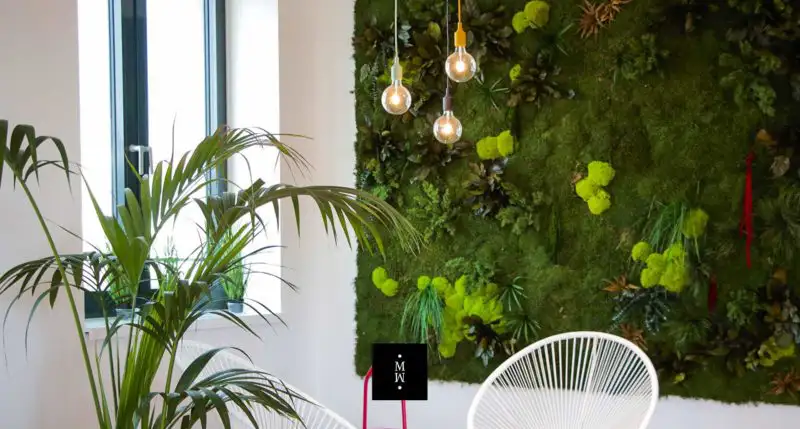
Jungle Moss Wall
As you can see, nature offers a variety of beautiful possibilities and materials for designing interiors in an environmentally friendly and sustainable way. Our stated goal at MOOSMOOS is to elevate your living and working spaces to a completely new level with our moss walls, enabling you to be relaxed, focused, and creative. We bring the most beautiful sensations, typically only experienced in a forest, directly to your walls and ceilings.
Let´s make the world a little bit more green